

How to Build and Strengthen Your Glute Muscles
The glutes are the largest and most powerful muscle group in the human body. Beyond enhancing your physique, strong glute muscles play a vital role in athletic performance, posture, balance, and everyday movement. Activities such as walking, running, jumping, climbing stairs, and lifting all rely on well-developed glute muscles.
Modern lifestyles often involve prolonged sitting, which can weaken the glutes and contribute to lower back pain, poor posture, reduced hip mobility, and decreased athletic performance. That's why building and strengthening your glutes should be viewed as complementary goals for improving both appearance and overall physical function.
Whether your objective is to increase muscle size, improve lower-body strength, enhance sports performance, or simply move more comfortably throughout the day, following a structured training program with proper nutrition and adequate recovery can help you maximize your results.
In this guide, Morvigo Pro explains the science-backed strategies, exercises, and training principles that can help you develop stronger, healthier, and more powerful glute muscles.

How Do Glute Muscles Grow?
Muscle growth, scientifically known as hypertrophy, occurs when muscle fibers experience small amounts of stress during resistance training. During the recovery process, the body repairs these fibers, allowing them to become stronger and larger over time. To effectively build your glutes, you should focus on three key principles:
1. Prioritize Recovery
Your muscles don't grow while you're training—they grow while you recover. Giving your lower body enough time to rest between intense workouts allows your glute muscles to repair and adapt. Without adequate recovery, progress can slow or even stall.
2. Apply Progressive Overload
Progressive overload means gradually increasing the challenge placed on your muscles over time. This can be achieved by:
Lifting heavier weights
Performing more repetitions or sets
Increasing training volume
Improving exercise intensity or control
Consistently challenging your glutes encourages continuous strength and muscle development.
3. Eat a Balanced Diet
Proper nutrition is essential for muscle growth. Protein provides the building blocks your muscles need to recover and grow, while carbohydrates supply the energy required for effective workouts. A balanced diet combined with consistent training supports optimal performance and recovery.
Build Stronger Glutes with the Right Training
Well-developed glute muscles are not only visually impressive—they also improve strength, stability, posture, and athletic performance. Exercises such as Hip Thrusts, Glute Bridges, Romanian Deadlifts, Bulgarian Split Squats, and Cable Kickbacks are among the most effective movements for targeting the glutes when performed with proper technique and progressive overload.
At Morvigo Pro, you'll discover expert fitness guides, proven training methods, and practical workout tips to help you build stronger, more powerful glutes and achieve your fitness goals safely and effectively.

Best Glute Exercises for Building Stronger Glutes
The glute muscles consist of three primary muscles: gluteus maximus, gluteus medius, and gluteus minimus. Together, these muscles determine the size, shape, strength, and function of your glutes. For balanced muscle development, each area should be trained with a variety of exercises that target different movement patterns.
Squat
The Squat is one of the most effective compound exercises for building stronger and more muscular glutes. It trains the glutes through a full range of motion while also engaging the quadriceps, hamstrings, and core. Because it creates high mechanical tension, the squat is considered one of the most effective exercises for stimulating muscle growth.
To maximize glute activation, lower your hips until they are at least parallel to your knees—or slightly below if your mobility allows. This places the gluteus maximus under a greater stretch, which can help promote muscle development.
Proper Squat Technique
Stand with your feet shoulder-width apart.
Turn your toes slightly outward.
Keep your spine in a neutral position throughout the movement.
Initiate the movement by pushing your hips back.
Prevent your knees from collapsing inward.
Drive through your heels as you return to the starting position.
Several squat variations can also help target the glutes from different angles. For example, the Sumo Squat uses a wider stance, placing greater emphasis on the inner thighs and glutes. Holding a dumbbell in front of your body during a Dumbbell Sumo Squat increases resistance while maintaining proper balance and control.
Hip Thrust
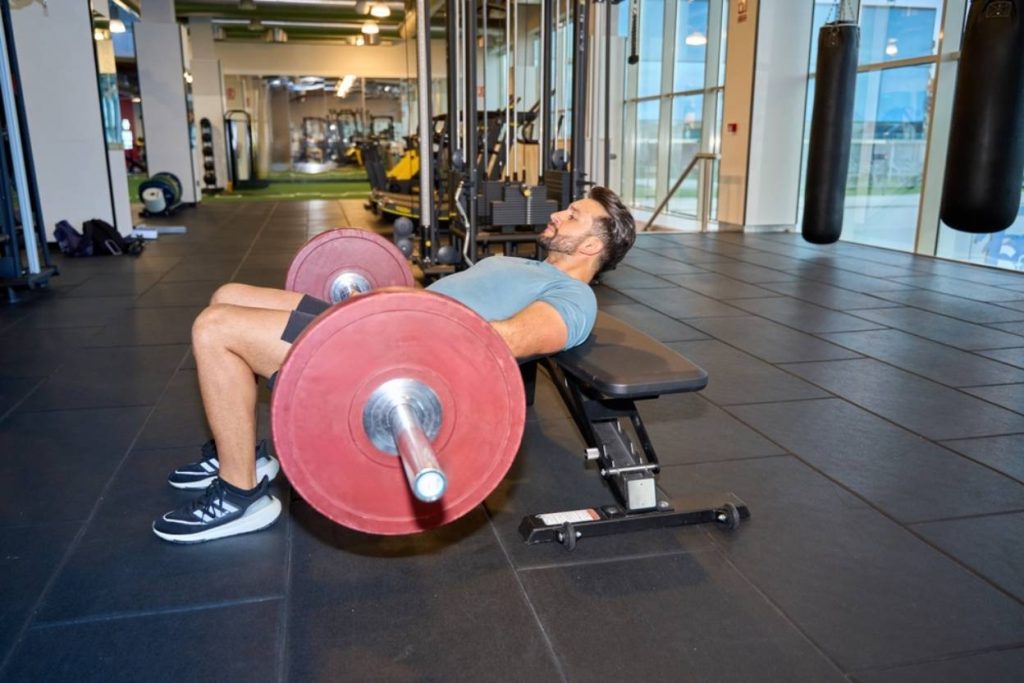
The Hip Thrust is widely recognized as one of the most effective isolation exercises for developing the glute muscles. Unlike many compound movements, the Hip Thrust places significant tension directly on the gluteus maximus, making it a staple exercise in many strength and bodybuilding programs.
To perform the exercise, rest your upper back against a sturdy bench, place your feet flat on the floor about hip-width apart, and bend your knees to approximately 90 degrees. Drive through your heels to lift your hips until your body forms a straight line from your shoulders to your knees.
Benefits of the Hip Thrust
Targets the gluteus maximus with high muscle activation
Improves hip extension strength
Supports athletic performance and lower-body power
Helps develop fuller, stronger glutes
Engages the core and lower back stabilizing muscles
One of the biggest advantages of the Hip Thrust is its ability to train the glutes through a large range of motion while maintaining continuous tension throughout the exercise.
Tips for Proper Hip Thrust Form
Keep your feet flat on the floor.
Maintain a neutral spine throughout the movement.
Squeeze your glutes at the top of each repetition.
Avoid excessive arching of the lower back.
Keep your neck in a comfortable, neutral position.
Lower the weight under control before beginning the next repetition.
At Morvigo Pro, we recommend combining compound movements like Squats with isolation exercises such as Hip Thrusts to build stronger, more powerful, and well-balanced glute muscles while improving overall lower-body performance.
Lunges
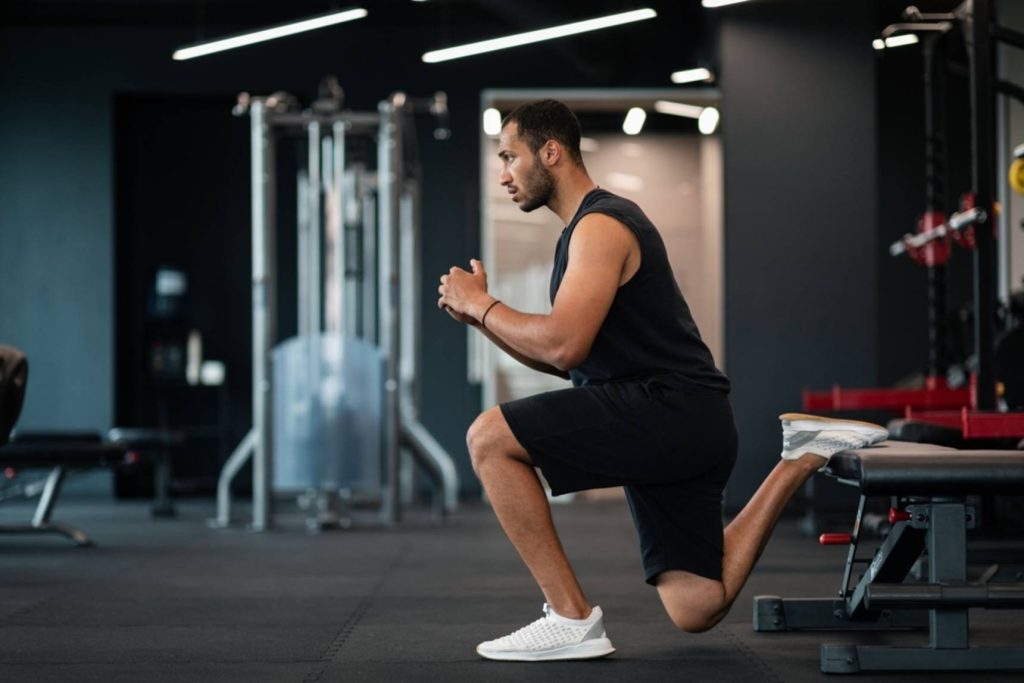
Lunges are one of the most effective unilateral exercises for building stronger glutes while improving balance, coordination, and lower-body stability. Because each leg works independently, lunges help correct muscle imbalances and ensure both sides of the body develop evenly.
This exercise places the glutes under a deep stretch through a large range of motion, making it an excellent choice for muscle growth. Lunges also improve functional strength, helping make everyday activities such as walking, climbing stairs, and running easier.
Tips for Proper Lunge Form
Keep your front knee aligned over your ankle.
Avoid letting your front knee travel excessively past your toes.
Maintain an upright torso throughout the movement.
Engage your core for stability.
Take a longer step to increase glute activation.
Push through your front heel to return to the starting position.
Romanian Deadlift (RDL)
The Romanian Deadlift (RDL) is one of the best exercises for strengthening the glutes while also targeting the hamstrings and lower back stabilizing muscles. It reinforces the hip hinge movement pattern, which is essential for developing strength, posture, and athletic performance.
Instead of thinking about lifting the weight, focus on pushing your hips backward during the lowering phase and driving them forward as you stand.
Benefits of the Romanian Deadlift
Strengthens the gluteus maximus
Builds the hamstrings and posterior chain
Improves hip hinge mechanics
Supports lower back stability
Enhances overall lower-body strength
Tips for Proper RDL Form
Keep the barbell or dumbbells close to your legs.
Maintain a neutral spine throughout the exercise.
Push your hips backward rather than bending excessively at the waist.
Lower the weight until you feel a stretch in your hamstrings.
Drive your hips forward to complete the movement.
If you feel pain in your lower back, reduce the weight and review your technique.
Cable Kickbacks & Cable Hip Abductions
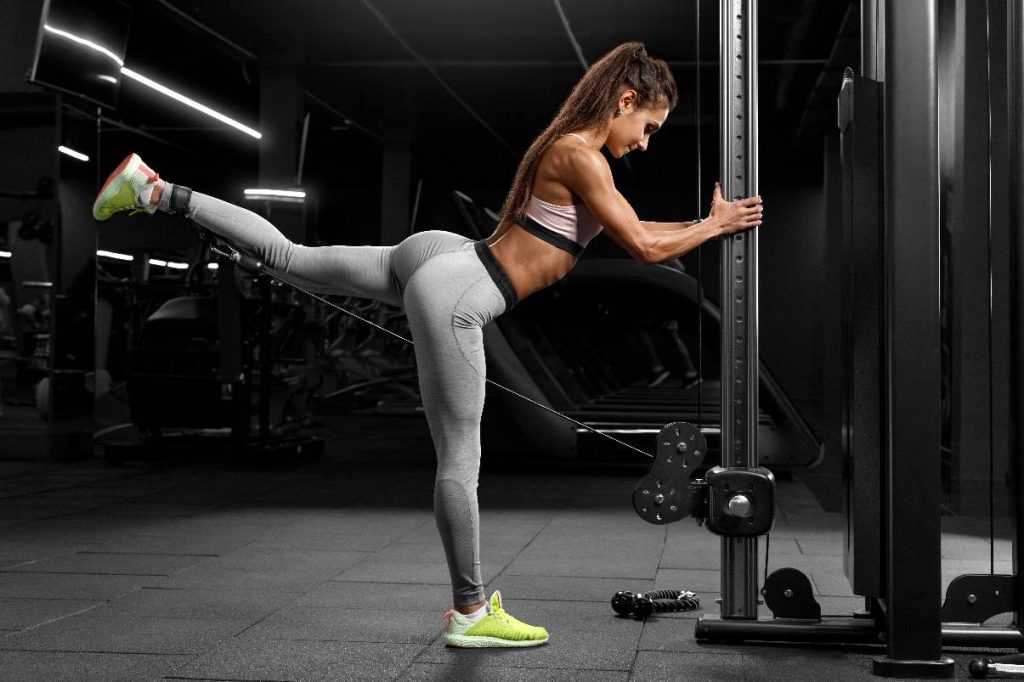
Unlike compound movements, Cable Kickbacks and Cable Hip Abductions are isolation exercises designed to specifically target the glute muscles—particularly the gluteus medius, which contributes to the rounded appearance and stability of the hips.
The primary goal of these exercises is not to lift the heaviest weight possible but to establish a strong mind-muscle connection by fully contracting the glutes during every repetition.
In a Cable Kickback, the leg is extended backward, while a Cable Hip Abduction involves moving the leg outward away from the body. Both movements should be slow, controlled, and performed through a comfortable range of motion.
Benefits of Cable Kickbacks & Hip Abductions
Isolate the glute muscles effectively
Increase glute activation and muscle awareness
Improve hip stability
Support balanced lower-body development
Help create fuller, more defined glutes
Tips for Proper Technique
Move slowly and with complete control.
Squeeze your glutes at the top of each repetition.
Avoid swinging your leg or using momentum.
Keep your torso stable throughout the exercise.
Stop the movement once your glutes are fully contracted rather than forcing additional range of motion.
At Morvigo Pro, we recommend combining heavy compound lifts such as Squats, Lunges, and Romanian Deadlifts with isolation exercises like Cable Kickbacks and Hip Abductions to maximize glute growth, improve strength, and build balanced lower-body development.
7-Day Glute Workout Plan
The following 7-day glute workout plan is designed to help build stronger, fuller glutes while allowing adequate recovery for muscle growth. If you're new to strength training, begin with lighter weights and prioritize proper exercise technique before increasing resistance.
| Day | Workout Focus | Exercise | Sets | Reps |
|---|---|---|---|---|
| Monday | Heavy Strength & Glute Growth | Barbell Hip Thrust | 4 | 6–8 |
| Bulgarian Split Squat | 3 | 10 each leg | ||
| Romanian Deadlift | 3 | 8–10 | ||
| Hip Abduction (Machine or Cable) | 3 | 15–20 (Superset) | ||
| Tuesday | Active Recovery | Light Cardio or Yoga | — | 45–60 minutes |
| Wednesday | Rest Day | Full Recovery | — | — |
| Thursday | Moderate Volume (Compound & Isolation) | Barbell Squat | 4 | 8–12 |
| Cable Kickbacks | 3 | 12–15 each leg | ||
| Dumbbell Walking Lunges | 3 | 12 each leg | ||
| Glute Bridge | 3 | 15–20 | ||
| Friday | Active Recovery | Walking or Cycling | — | 45–60 minutes |
| Saturday | Glute Shaping & Endurance | Barbell Hip Thrust (Light Weight) | 3 | 15–20 |
| Cable Pull-Through | 3 | 12–15 | ||
| Standing Banded Glute Abduction | 3 | 20 each leg | ||
| Fire Hydrants | 3 | 20 each leg | ||
| Sunday | Rest Day | Full Recovery | — | — |
Tips for Better Results
Warm up for 5–10 minutes before each workout.
Focus on proper form instead of lifting heavier weights too quickly.
Increase weight gradually as your strength improves (progressive overload).
Consume enough protein and maintain a balanced diet to support muscle growth.
Allow at least 48 hours of recovery between intense glute workouts.
Aim for 7–9 hours of quality sleep each night to optimize recovery and performance.
At Morvigo Pro, we recommend combining consistent strength training, balanced nutrition, and proper recovery to maximize glute development and achieve long-term fitness results.
How to Strengthen Your Glute Muscles
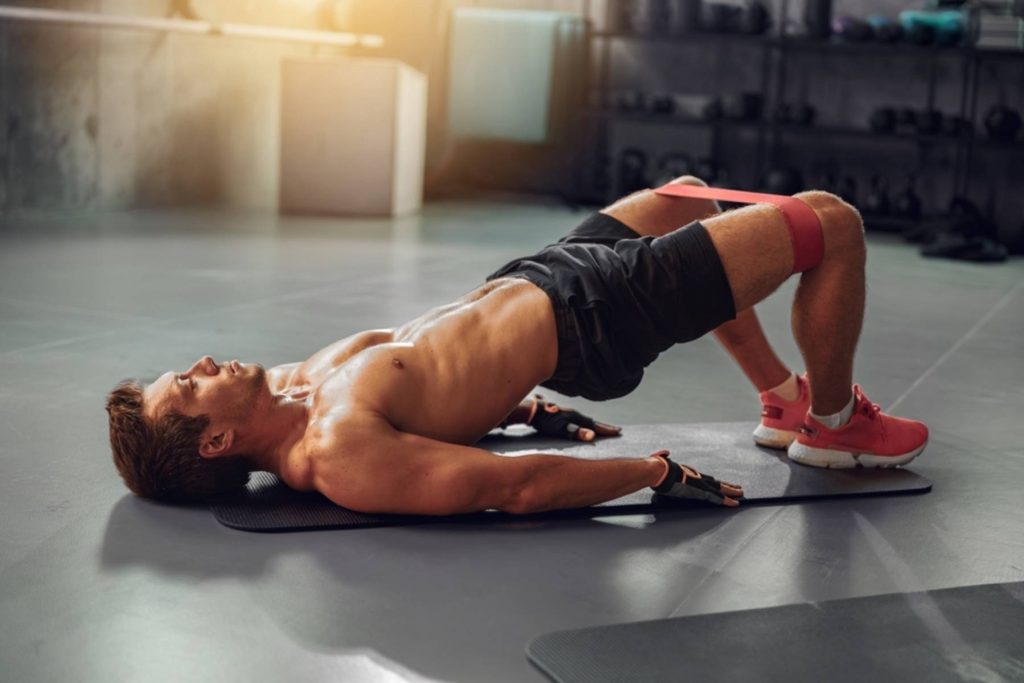
Building stronger glutes isn't just about lifting heavier weights—it's also about improving the connection between your brain and your muscles. Prolonged sitting can lead to reduced glute activation, a condition often referred to as gluteal amnesia or "sleeping glutes." Before beginning your workout, performing a few activation exercises with resistance bands can help engage your glute muscles and improve your mind-muscle connection during heavier lifts.
Focus on Controlled Movement
Exercise quality is just as important as exercise selection. Performing each repetition with control increases muscle activation and helps reduce the risk of injury.
One effective technique is to slow down the eccentric (lowering) phase of each movement to approximately 3–4 seconds. This increases time under tension, a key factor for building strength and muscle.
To improve your technique:
Perform every repetition with control.
Lower the weight slowly during each exercise.
Maintain proper posture throughout the movement.
Use a mirror or seek guidance from a qualified fitness professional if needed.
Include Single-Leg Exercises
True lower-body strength is often revealed when training one leg at a time. While bilateral exercises such as Squats and Hip Thrusts are essential, incorporating unilateral movements helps improve balance, stability, and muscular symmetry.
Single-leg exercises activate the gluteus medius and gluteus minimus, two muscles responsible for stabilizing the hips and pelvis during movement.
Excellent unilateral glute exercises include:
Bulgarian Split Squats
Walking Lunges
Step-Ups
Single-Leg Romanian Deadlifts
Single-Leg Glute Bridges
Training each leg individually can help correct strength imbalances and improve overall lower-body performance.
Strengthen Your Core
Strong glutes work best when supported by a strong core. Your abdominal and lower back muscles help stabilize your pelvis during nearly every lower-body exercise, allowing your glutes to generate force more efficiently.
Adding core exercises to your routine can improve stability, posture, and lifting performance.
Recommended core exercises include:
Plank
Side Plank
Dead Bug
Bird Dog
Pallof Press
Develop Explosive Power
Once you've established a solid foundation of strength, you can begin training for power. Explosive exercises teach your muscles to generate force quickly, improving athletic performance and functional movement.
Examples of plyometric glute exercises include:
Box Jumps
Broad Jumps
Jump Squats
Kettlebell Swings
Explosive Step-Ups
These movements enhance lower-body power while improving speed, coordination, and overall athleticism.
Key Takeaways
To build stronger glutes, combine heavy strength training, controlled movement, unilateral exercises, core strengthening, and explosive training. Consistency, progressive overload, proper nutrition, and adequate recovery remain the most important factors for long-term progress.
At Morvigo Pro, we believe that a well-rounded training program focused on strength, stability, mobility, and recovery is the key to developing stronger, healthier, and more powerful glutes.
Glute Strengthening Exercises
Kettlebell Swing
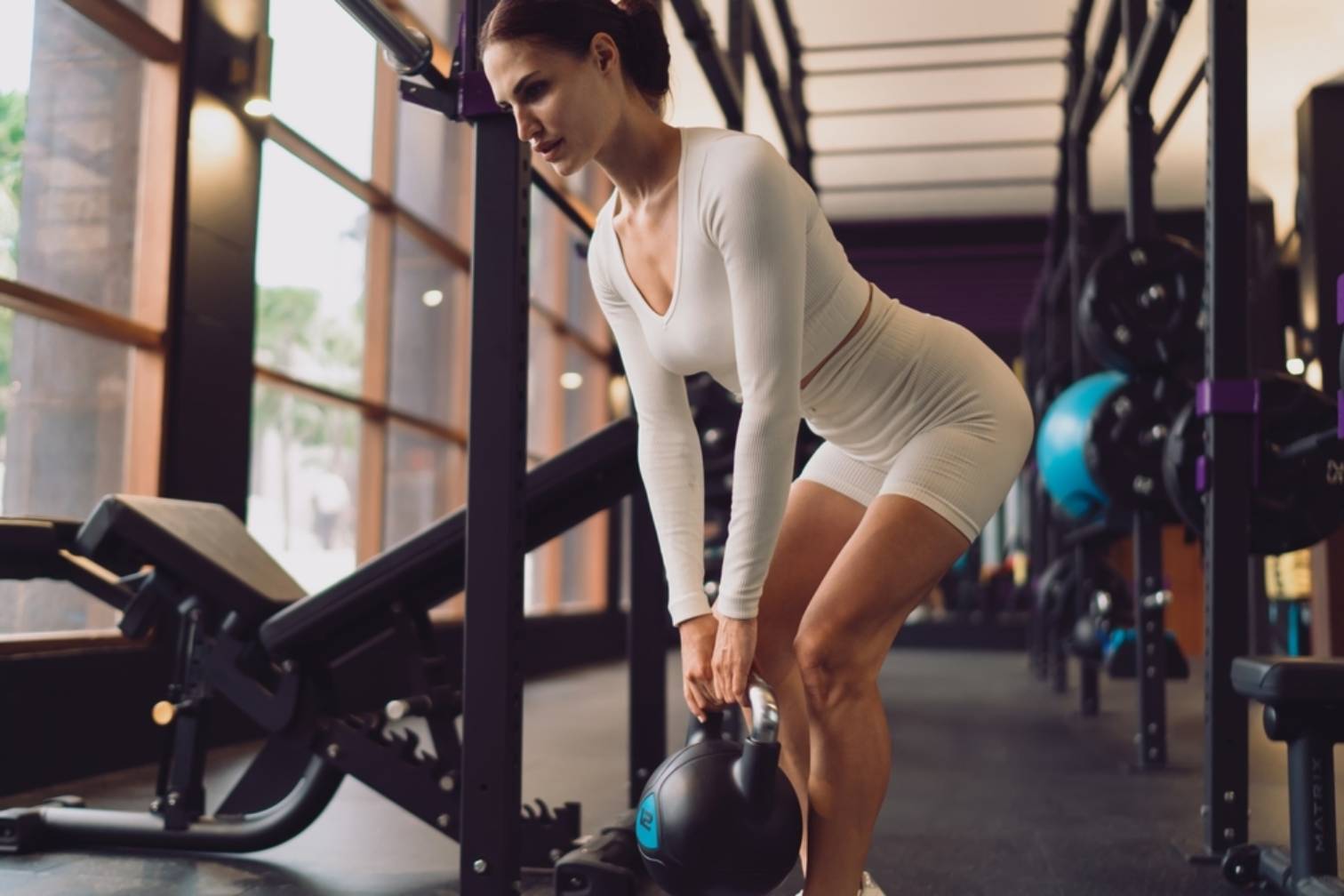
The Kettlebell Swing is a powerful exercise that develops explosive hip strength while improving lower-body power and athletic performance. It primarily targets the gluteus maximus and hamstrings, training them to generate force quickly through explosive hip extension.
Rather than lifting the kettlebell with your arms, the movement should be driven almost entirely by your hips. Your arms simply guide the kettlebell while your glutes create the momentum.
Tips for Proper Kettlebell Swing Form
Hinge at your hips instead of squatting.
Drive your hips forward explosively.
Squeeze your glutes and core at the top of the movement.
Keep your back neutral throughout the exercise.
Avoid leaning backward or overextending your lower back.
Let your arms remain relaxed instead of pulling the kettlebell upward.
Lateral Band Walk
The Lateral Band Walk is one of the best exercises for strengthening the gluteus medius, a muscle that plays a key role in hip stability, balance, and proper walking mechanics.
Strong gluteus medius muscles help stabilize the pelvis, improve movement efficiency, and may reduce the risk of lower back, knee, and hip discomfort.
How to Perform a Lateral Band Walk
Place a resistance band around your ankles or just above your knees.
Stand with your feet shoulder-width apart.
Bend your knees slightly into a half-squat position.
Step sideways while maintaining constant tension on the band.
Keep your torso upright and avoid swaying from side to side.
Continue moving slowly in both directions.
Step-Up
The Step-Up is an excellent unilateral exercise that strengthens the glutes while improving balance, coordination, and single-leg stability. It closely mimics everyday movements such as climbing stairs, making it highly functional for daily life and sports performance.
By working one leg at a time, Step-Ups help eliminate strength imbalances and increase lower-body power.
Tips for Proper Step-Up Form
Use a platform that places your knee at approximately a 90-degree angle.
Drive through the heel of your working leg.
Minimize assistance from your trailing leg.
Lower yourself slowly and under control.
Keep your chest lifted and core engaged throughout the exercise.
Bird Dog
The Bird Dog is a core stability exercise that strengthens the connection between your glutes, abdominal muscles, and lower back. Rather than focusing on maximum strength, it improves neuromuscular coordination, posture, and spinal stability.
Because it teaches your body to stabilize the pelvis while moving your limbs independently, the Bird Dog is an excellent exercise for injury prevention and overall functional fitness.
Benefits of the Bird Dog
Strengthens the glutes and core simultaneously
Improves balance and coordination
Enhances spinal stability
Supports better posture
Helps reduce the risk of lower back discomfort
Tips for Proper Bird Dog Form
Begin on your hands and knees.
Extend one arm and the opposite leg simultaneously.
Keep your hips level throughout the movement.
Avoid rotating your torso or shifting your weight.
Move slowly and with control.
Focus on stability rather than reaching as far as possible.
Train Smarter for Stronger Glutes
Building stronger glutes requires more than simply performing the right exercises. Consistency, progressive overload, proper recovery, and excellent technique are the foundation of long-term success. Combining explosive movements like Kettlebell Swings, stability exercises such as Bird Dogs, unilateral training with Step-Ups, and activation drills like Lateral Band Walks creates a well-rounded glute strengthening program.
At Morvigo Pro, we're committed to helping you build stronger, healthier, and more functional glutes through evidence-based training, expert fitness advice, and practical workout guidance.
Glute Workout Program: Build Stronger and More Powerful Glutes
Strong glute muscles are essential not only for improving your physique but also for enhancing strength, balance, mobility, and athletic performance. The glutes play a major role in everyday movements such as walking, running, jumping, and lifting.
This glute strengthening program is designed to target the Gluteus Maximus, Gluteus Medius, and Gluteus Minimus through a combination of unilateral exercises, compound movements, and core stability training.
As you progress, you can increase resistance by adding resistance bands, dumbbells, kettlebells, or barbells to continue challenging your muscles and promoting growth.
Weekly Glute Strength Training Program
| Day | Training Focus | Exercise | Sets | Reps | Rest |
|---|---|---|---|---|---|
| Monday | Single-Leg Strength & Stability | Single-Leg Romanian Deadlift | 3 | 10-12 each leg | 90 sec |
| Bulgarian Split Squat | 3 | 10 each leg | 90 sec | ||
| Glute Bridge | 3 | 12-15 reps | 60 sec | ||
| Bird-Dog | 3 | 15 each leg | 45 sec | ||
| Tuesday | Active Recovery | Walking, swimming, or hip mobility yoga flow | - | 45-60 minutes | - |
| Wednesday | Dynamic Strength & Power | Kettlebell Swing | 4 | 12-15 reps | 90 sec |
| Weighted Step-Ups | 3 | 10 each leg | 90 sec | ||
| Lateral Band Walks | 3 | 20 steps each direction | 60 sec | ||
| Rotating Plank | 3 | Maximum time | 60 sec | ||
| Thursday | Rest Day | Recovery | - | - | - |
| Friday | Compound Strength & Glute Development | Barbell Hip Thrust (Controlled Tempo) | 4 | 8-12 reps | 120 sec |
| Dumbbell Walking Lunges | 3 | 12 each leg | 90 sec | ||
| Cable Kickbacks | 3 | 15 each leg | 60 sec | ||
| Side Plank | 3 | Maximum time each side | 45 sec | ||
| Saturday | Light Cardio & Mobility | Stretching and Foam Rolling | - | 45-60 minutes | - |
| Sunday | Full Rest | Recovery Day | - | - | - |
Understanding Your Glute Muscles
Gluteus Maximus
The largest glute muscle, responsible for hip extension, power generation, and overall lower-body strength. Exercises like hip thrusts, deadlifts, and squats effectively target this area.
Gluteus Medius
This muscle helps with hip stability, balance, and controlling leg movement. Exercises such as lateral band walks and single-leg movements are excellent for strengthening it.
Gluteus Minimus
The smallest glute muscle that supports hip stability, movement control, and proper joint function.
Tips for Better Glute Growth
Gradually increase resistance or repetitions over time.
Focus on controlled movements instead of rushing through exercises.
Maintain proper form to activate the glutes effectively.
Consume enough protein to support muscle repair and growth.
Prioritize sleep and recovery for better results.
Final Thoughts
Building stronger glutes is about more than appearance. A well-developed glute system improves strength, stability, athletic performance, and overall movement quality.
By consistently following a structured training plan and progressively challenging your muscles, you can maximize your glute growth and build a stronger, more balanced body.